More insights.

Fiction-Whodunnit
Whodunnit
Yueze Liu
Jul. 7, 2024Chapter 1
As far as I can remember, every summer I would encounter yellow-skinned merchants
from the south, clad in short, sturdy coats, traveling great distances to trade for my humble
carvings and handcrafted knick-knacks. Their visits were brief but significant, offering just
enough income to ensure I would not starve during the brutal winter months. We haggled
fiercely; their voices rose like waves against my stubborn silence, eventually settling into
grudging agreement. They left me poorer than I wished but wealthier than I had been, a small
solace in my lonely existence.
Yet, recent years saw fewer of these familiar merchants. Instead, foreigners speaking
peculiar accents from the western hinterlands began quietly arriving. Unlike my previous buyers,
these visitors did not care for my craftsmanship; instead, they whispered behind closed doors,
distributing mysterious books and leaflets laden with dangerous ideas—words of freedom,
rebellion, and dismantling the established order. Their secretive activities had begun to unsettle
the ruling lords, even alarming the distant emperor himself. Hangings and banishments became
frequent spectacles, sometimes bypassing the formality of trials, dragging accused conspirators
directly to the gallows in our town square.
I was an ordinary writer, or perhaps just an ordinary craftsman, too poor and too
insignificant to earn the world's notice. At least, that is what I believed until the day Gretchen
arrived at my doorstep, changing everything.
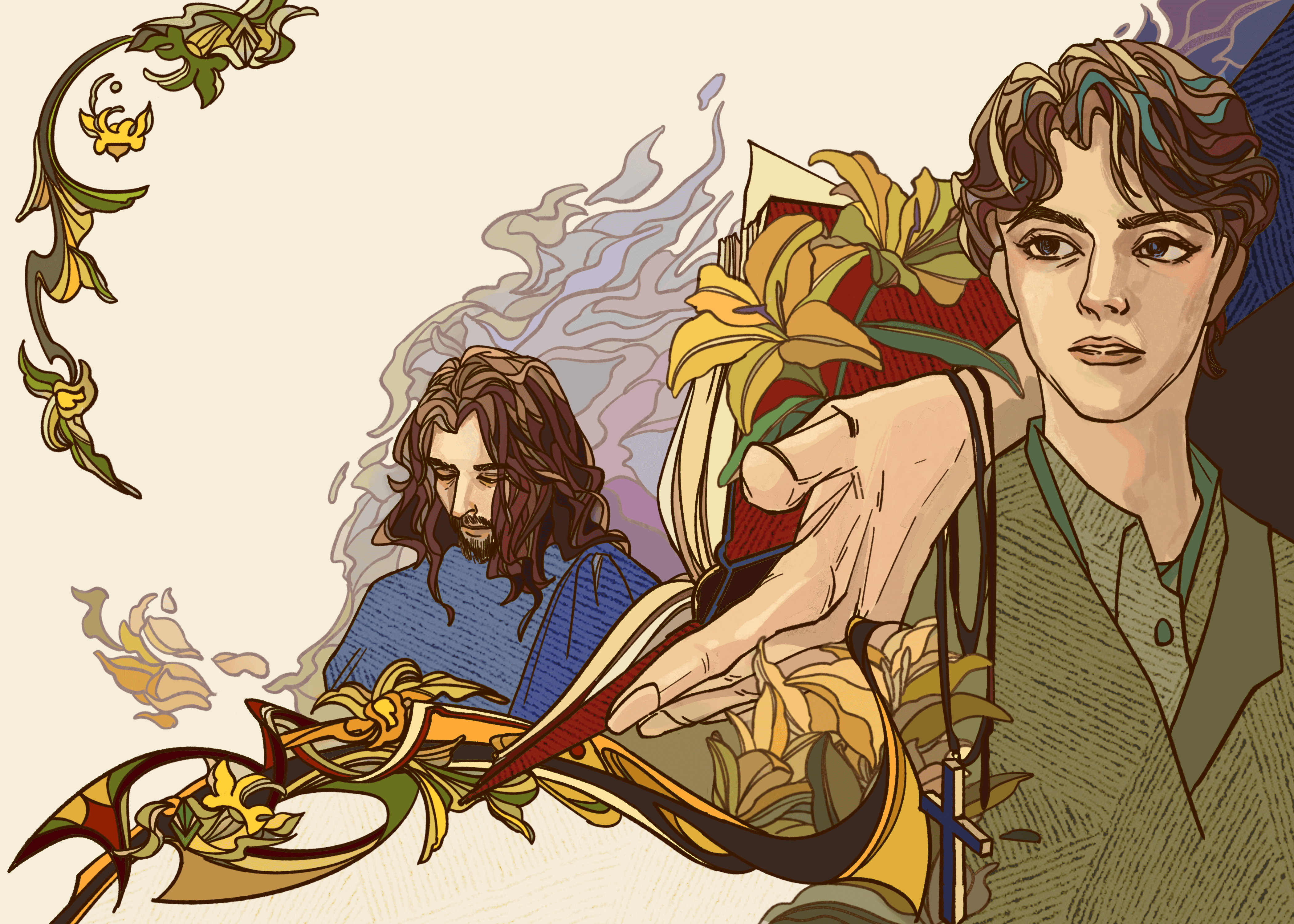
Gretchen was a student from a distant city, a slender young man with pale skin and
thoughtful, dark eyes. He wore a neatly kept long coat, always clean but modest, implying a
restrained dignity. When he first approached me to rent my basement room, I was skeptical. I
had set an exorbitant price, half-joking, believing it impossible anyone would pay so dearly for
that damp, mold-ridden space beneath my modest home. Yet, without argument or hesitation,
Gretchen accepted. He claimed to desire only solitude and quiet, explaining softly that he was
preparing his thesis and needed a place free from distraction.
His presence quickly became a curiosity. Though rarely spending the night at the rented
room, Gretchen would appear at strange hours, his demeanor always composed, his voice gentle but firm. Occasionally, he would share tea with me, engaging in polite conversations about
poetry, art, and philosophy—subjects I found intriguing but distant from my daily struggle for
survival.
However, tranquility soon shattered. Two nights prior, unable to sleep, I had wandered
downstairs, drawn by strange noises echoing from the basement. Peering cautiously through the
cracked doorway, I discovered Gretchen and two strangers working feverishly over my parents’
ancient printing press. The men whispered fiercely, leaflets stacked like fallen leaves around
them. These pamphlets bore words filled with venom against the aristocracy, slogans calling for
rebellion, insurrection, and the violent overthrow of the empire itself.
My heart raced with fear and betrayal. Gretchen had deceived me, exploiting my trust and
poverty to stage his dangerous schemes beneath my very home. I spent two sleepless days
collecting the damning evidence scattered in the basement, preparing my words carefully,
determined to confront Gretchen when he returned.
Now, as I sat anxiously by the door, surrounded by evidence, the chill wind blew harshly,
misting the windows. My fingers trembled nervously, sharpening each other in agitation. The
door swung open softly.
"You're finally back, Mr. Gretchen," I said, trying to keep my voice steady.
"Good afternoon, Mr. Taliesin," he greeted calmly, his voice smooth as polished glass.
Gretchen gently removed his long coat, meticulously hanging it beside the door. "Why are you
seated here, sir? You seem... distressed."
My throat tightened. "You used my parents’ printing press without permission," I
accused, my voice shaking with anger and fear. "You risked my life—our lives—for your
dangerous ideals."
Gretchen regarded me steadily, his dark eyes cold yet oddly compassionate. "Ideals are
always dangerous to those who fear change," he replied softly, folding his hands carefully. "Your
parents understood this better than you do.""My parents are dead because of such ideals!" I snapped, unable to restrain my bitterness.
"Their beliefs offered them nothing but early graves. Why disturb the peace we barely hold onto?
Why risk everything for an illusion?"
"Peace?" Gretchen echoed, a slight edge sharpening his calm tone. "You mistake silence
for peace, oppression for stability. Your so-called peace is built on the broken backs of the
oppressed, held together by fear."
"And your precious freedom," I retorted heatedly, "feeds on the bodies of those you claim
to defend. You use people like me, the poor, the powerless. You talk of liberation, yet you have
no understanding of our daily suffering. You sacrifice the innocent for your unreachable
dreams."
He tilted his head slightly, eyes narrowing thoughtfully. "Sacrifice is necessary. The path
to freedom demands it. You accuse me of ignorance, yet you willingly choose chains over
uncertainty. Is living on your knees truly better than risking death for a chance to stand?"
"Your philosophy is easy when others bear the cost," I shot back bitterly. "You speak
beautifully, yet your hands remain clean. It is people like me, people who trust your promises,
who pay the real price."
Gretchen sighed, briefly lowering his gaze before meeting mine again. "Perhaps you're
right," he admitted softly. "But change demands sacrifice. History remembers the courageous,
not those who cling desperately to false comforts."
"And what about those who die forgotten, like my parents?" I challenged him, anger
burning fiercely within me. "Are they heroes too, or simply fools lost in the dust?"
Before he could reply, heavy footsteps echoed outside. Panic surged through me. "The
gendarmes," I gasped, my heart thundering. "They'll listen to your explanation, won't they? Sir?"
His expression remained impassive, almost regretful, as he turned slowly towards the opening
door.Chapter 2
As the gendarmes poured into my home, shouting commands and pointing rifles, my
mind slipped into a whirlwind of memories—vivid, poignant images of my parents flashed
before my eyes, illuminated by the turmoil unfolding around me.
My parents were printers—idealists to the core, who saw their trade not merely as a craft,
but as a noble tool for enlightenment and liberation. My earliest memories were filled with the
rhythmic clatter of their printing press, the ink-stained fingers of my father meticulously setting
metal type, the gentle voice of my mother reading aloud revolutionary texts by candlelight. They
spoke endlessly about freedom, justice, and equality—ideals that burned fiercely in their hearts,
brighter even than the tiny flame that warmed our humble dwelling.
Yet, their fiery convictions brought little practical comfort. Our home was perpetually
cold, the cupboards bare more often than not. Neighbors admired my parents’ bravery from afar
but feared close association, wary of attracting the empire's watchful eyes. Isolation and poverty
were our constant companions, stark contrasts to my parents’ lofty dreams.
I grew resentful as I aged, bitter towards ideals that offered us no tangible relief, only
more hardship and risk. My parents would respond patiently to my frustrations, assuring me their
struggle was necessary, that change required sacrifice, and eventually, their efforts would bear
fruit for all. Their optimism never wavered, even as their health deteriorated from endless labor
and deprivation.
The day the empire’s men arrived remains etched sharply in my memory. Soldiers
stormed our home, overturning furniture and scattering papers. My parents, defiant yet dignified,
stood firm, never begging for mercy, never recanting their beliefs. As they were dragged away,
they left me with only the silent printing press and a legacy of hardship wrapped in nobility.
Years later, facing Gretchen’s betrayal and the gendarmes' harsh hands gripping my
arms, those painful memories resurged with a bitter clarity. History was repeating itself—but this
time, I was the one caught in its cruel machinery.The gendarmes roughly bound me, their accusations muffled by my internal chaos.
Gretchen stood impassively nearby, his expression unreadable, eyes cast downward as if
mourning an inevitable tragedy.
"I trusted you," I hissed bitterly, glaring at him. "I thought you were different, wiser than
my parents. You saw the world clearly. How could you betray me—betray all of us—like this?"
He lifted his gaze slowly, his dark eyes solemn yet unrepentant. "Your parents
understood something you never have," Gretchen murmured calmly. "True change demands
sacrifice. You blame ideals for your suffering, yet you willingly embrace oppression out of fear.
Your parents chose courage; you chose comfort. Which of us is truly betraying their memory?"
His words stung deeply, igniting a fire within me born of indignation and grief. "You
speak of sacrifice," I spat back, "yet it is never yours to make. You talk nobly of the poor's plight
but exploit our desperation. You preach freedom while binding us tighter in the chains of your
dangerous games."
The gendarmes shoved me roughly towards the door, cutting short my angry retort. Yet,
even as I stumbled through the doorway, Gretchen’s voice echoed hauntingly behind me:
"History will remember bravery, not compliance."
Dragged into the harsh sunlight of the town square, reality crashed violently upon me.
Bystanders watched in muted horror, their faces mirroring my parents' neighbors' distant pity and
helpless resignation. My parents had died for ideals that brought no immediate relief, only more
suffering to those left behind. And now, history claimed another victim.
As I was forced onto the cart heading to prison, Gretchen’s betrayal pierced my soul
deeper than any chains or bars could ever do. He spoke passionately of ideals, yet he ignored the
real people crushed beneath their pursuit. His vision of freedom was as cold and heartless as the
oppression he claimed to fight, indifferent to the innocent lives consumed by its relentless
hunger.And in that bitter realization, something shifted inside me. Fear gave way to burning
anger—a fury directed not only at Gretchen but also at myself, for believing in false promises,
for failing to recognize that beautiful words offered no true shelter.
The cart rattled onwards, every jolt deepening my rage. The guards remained silent,
indifferent, just another cog in the relentless machinery of oppression. My parents' ideals had
blinded them, Gretchen's ambition had exploited them, and now my ignorance condemned me.
My imprisonment loomed ahead, a dark abyss promising no escape. Yet, as anger
simmered within me, it forged a strange kind of strength, bitter and defiant. If I could not find
redemption, perhaps at least I could find clarity.
The shadow of the prison rose before me, cold and foreboding, welcoming me into its
grim embrace.Interlude
The metallic clang of the prison cell door startled me awake from restless sleep, and I
blinked groggily as torchlight poured into my dark confinement. Standing silhouetted against the
flickering glow was Gretchen. My heart seized painfully, resentment and suspicion flaring
instantly.
"What are you doing here?" My voice was raspy, edged with the bitterness that had
become my constant companion.
Gretchen stepped quietly into the cell, his expression soft, contrite even, though I
instinctively distrusted it. "I came to say goodbye," he began gently, lowering himself to sit on
the rough stone bench beside me. "And perhaps—to offer you another chance."
I stared at him incredulously, my chains rattling softly as I shifted. "Another chance?
What cruel joke is this, Gretchen? You've already sealed my fate."
He met my gaze earnestly, hands resting calmly on his knees. "I regret how events
unfolded. You must believe I didn't intend this outcome. But your suffering might yet have
purpose. It could serve the greater good."
A bitter laugh escaped me, echoing harshly in the grim cell. "Greater good? Spare me
your empty words. You speak so nobly of freedom and sacrifice, yet your hands remain clean
while others pay the price."
His eyes narrowed, flickering briefly with impatience before settling again into measured
calm. "Sacrifice is inevitable in the pursuit of justice. Yes, innocents suffer—it's a brutal reality I
do not deny. But can you honestly tell me your life was worth living under the empire’s heel,
bowing submissively day after day?"
"At least it was a life," I spat defiantly, bitterness choking my words. "At least it was
mine. You claim to fight for people like me, yet you despise our small comforts, ridicule our
fears.""Because your comforts are chains," Gretchen insisted sharply. "You cling to a cage,
terrified of freedom because it's uncertain. This fear is exactly what they use against us,
controlling us with bread and fear."
"And what do you offer instead?" I challenged bitterly. "Empty promises? Noble graves?
My parents died chasing your illusions—dreams that never materialized into bread, warmth, or
safety. Tell me, Gretchen, how many more must suffer before you realize the futility of your
ideals?"
He sighed deeply, shoulders sinking slightly under the weight of our confrontation. "Your
parents understood the price of change. They believed in the cause with their whole hearts. Don't
dishonor their sacrifice with cowardice now. You can join us, help shape a future where justice
isn't an empty promise."
"Join you?" I scoffed harshly, glaring at him through angry tears. "Join those who use
others' misery as stepping stones to glory? Never."
He studied me silently, disappointment creeping into his expression. "You're making a
mistake," he murmured finally, sadness coloring his voice, though I suspected it was not for me.
"History won't remember those who obediently bowed their heads. It remembers those who
dared to resist, who chose to stand."
I leaned forward, chains straining at my wrists, my voice trembling with intensity.
"History forgets the countless nameless innocents crushed beneath the weight of your grand
dreams. It remembers only the winners. And men like you ensure people like me are never
counted among them."
He rose slowly, shaking his head, turning to leave. At the threshold, he paused briefly,
glancing back one last time. "I hoped to find courage still alive within you. But perhaps your
chains run deeper than I imagined."
The door clanged shut behind him, plunging me once more into darkness, his final words
echoing cruelly in my ears. Alone again, bitterness mingled with lingering doubt, a storm of conflicted emotions raging within me. Despite everything, a small voice inside questioned
whether Gretchen was right, whether my submission was merely the hollow comfort of a beaten
dog.
Yet even as doubt gnawed at my resolve, a deeper certainty remained: I could not
embrace ideals stained with so much innocent blood, even if it meant sacrificing my final chance
at redemption. And in that moment, despite my chains and impending doom, I felt something
strangely akin to pride—stubborn, defiant pride in my quiet resistance, even if history would
forget me entirely.Chapter 3
The heavy iron door slammed shut behind me, the echo reverberating through my bones
as I was thrust into the damp, shadow-filled cell. Alone, stripped of my dignity, the weight of
betrayal pressed heavily upon me. Time stretched endlessly in the darkness, allowing my
thoughts to wander dangerously free.
The cold stone walls closed around me like a tomb, their moist chill seeping deep into my
bones. I curled into a corner, clutching my ragged clothes around me, shivering from a cold far
deeper than physical. Gretchen’s betrayal stung viciously, yet beneath the initial rage, something
else stirred—a gnawing awareness of my complicity in my fate. My desire for safety had blinded
me to injustice; my cowardice had silenced my voice. This revelation brought a pain sharper than
the chains binding my wrists.
In the darkness of the cell, whispers drifted from adjacent cages, murmurs heavy with
resignation and despair. Days, perhaps weeks passed in indistinguishable gloom. One night,
when silence became unbearable, a soft voice broke the stillness.
“You’re new, aren’t you?” it asked, weary but gentle.
“Yes,” I croaked, startled by human contact after endless isolation.
“They take another idealist?” the voice inquired knowingly.
“No,” I answered bitterly. “Just a fool caught in someone else’s game. Someone else’s
ideals.”
A brief silence stretched before the voice spoke again, filled with thoughtful
understanding. “We all begin as fools, friend. Ideals seduce, betray, and ultimately consume. But
sometimes, they're all we have left to cling to.”
“Who are you?” I asked, desperate for companionship.“Just another victim of noble dreams,” he replied softly. “I once believed as they did—in
a future worth sacrifice. Until they turned their backs, moving onto the next sacrifice without a
backward glance.”
His words resonated deeply, illuminating the path of my parents, Gretchen, and my own
blind journey. Conversations continued night after night, shared with unseen neighbors. Each
story bore striking resemblance—men and women once driven by ideals or manipulated by those
who professed them, ultimately abandoned, condemned, and forgotten. The bitterness deepened
within me, transforming sorrow into a quiet, simmering fury.
“What good are these dreams,” I muttered one dark evening, “if they devour their own
children?”
“They’re visions for those far removed,” another voice replied sharply. “Those who
speak them rarely feel their true cost. We, the poor, always pay the highest price.”
Each day in the cell hardened my heart, crystallizing my anger against Gretchen, against
my parents, against myself. Memories of past comforts and naïve dreams became bitter ashes.
My parents’ earnest faces haunted me relentlessly, their ideals no longer comforting but
condemning. Had they known the true cost? Had they ever imagined the legacy of suffering their
dreams would leave behind?
One morning, the guards entered abruptly, dragging me roughly from my cell. The
blinding daylight pierced my eyes as I stumbled toward the square. Townspeople lined the
streets, their gazes turned downwards, expressions masked by practiced indifference. They had
seen this scene too often—the condemned marched solemnly toward death. My steps faltered,
anger briefly giving way to fear, yet I forced myself forward, dignity restored by defiance.
Standing beneath the gallows, my eyes swept the crowd, searching vainly for Gretchen’s
face, finding instead countless others—faces marked by poverty, weariness, and silent
complicity. My throat tightened, realization crashing over me. We were all prisoners—trapped
by fear, chained by ignorance, complicit through silence.The noose was slipped around my neck, coarse rope scratching my skin, yet I felt
strangely detached. My anger, bitter and fierce, had burned away fear. My gaze fell upon my
modest home across the square. Its familiar shape was now alien, windows darkened, shutters
hanging ajar, abandoned. My shadow stretched long across the square, an eerie reflection of my
looming death cast upon the place where I had foolishly thought myself safe.
As the platform dropped beneath me, breath stolen, vision blurring, one final, clear
thought pierced through the chaos…
Ah! I hate it, sir, I hate it! Because I'm a handful of bones, and I don't even know who to
blame! Whodunnit? Is it the dark-haired man in the long coat with the gentle tone? Was it the
emperor? Was it the chief of gendarmerie who dragged me out of the warm house? Was it the
moment of hesitation when I just confronted him? Was it the bloodline of rebellion that had
continued in me but was incapable of bursting out? Was it my mind that had been domesticated
and blinded by mediocrity and discipline? Or was it the fact that the wood that is deprived of the
nourishment of the land cannot burn on the too-vast ice field?Yueze Liu. Whodunnit
Fiction-Whodunnit
Whodunnit
Yueze Liu
Jul. 7, 2024Chapter 1
As far as I can remember, every summer I would encounter yellow-skinned merchants
from the south, clad in short, sturdy coats, traveling great distances to trade for my humble
carvings and handcrafted knick-knacks. Their visits were brief but significant, offering just
enough income to ensure I would not starve during the brutal winter months. We haggled
fiercely; their voices rose like waves against my stubborn silence, eventually settling into
grudging agreement. They left me poorer than I wished but wealthier than I had been, a small
solace in my lonely existence.
Yet, recent years saw fewer of these familiar merchants. Instead, foreigners speaking
peculiar accents from the western hinterlands began quietly arriving. Unlike my previous buyers,
these visitors did not care for my craftsmanship; instead, they whispered behind closed doors,
distributing mysterious books and leaflets laden with dangerous ideas—words of freedom,
rebellion, and dismantling the established order. Their secretive activities had begun to unsettle
the ruling lords, even alarming the distant emperor himself. Hangings and banishments became
frequent spectacles, sometimes bypassing the formality of trials, dragging accused conspirators
directly to the gallows in our town square.
I was an ordinary writer, or perhaps just an ordinary craftsman, too poor and too
insignificant to earn the world's notice. At least, that is what I believed until the day Gretchen
arrived at my doorstep, changing everything.
Gretchen was a student from a distant city, a slender young man with pale skin and
thoughtful, dark eyes. He wore a neatly kept long coat, always clean but modest, implying a
restrained dignity. When he first approached me to rent my basement room, I was skeptical. I
had set an exorbitant price, half-joking, believing it impossible anyone would pay so dearly for
that damp, mold-ridden space beneath my modest home. Yet, without argument or hesitation,
Gretchen accepted. He claimed to desire only solitude and quiet, explaining softly that he was
preparing his thesis and needed a place free from distraction.
His presence quickly became a curiosity. Though rarely spending the night at the rented
room, Gretchen would appear at strange hours, his demeanor always composed, his voice gentle but firm. Occasionally, he would share tea with me, engaging in polite conversations about
poetry, art, and philosophy—subjects I found intriguing but distant from my daily struggle for
survival.
However, tranquility soon shattered. Two nights prior, unable to sleep, I had wandered
downstairs, drawn by strange noises echoing from the basement. Peering cautiously through the
cracked doorway, I discovered Gretchen and two strangers working feverishly over my parents’
ancient printing press. The men whispered fiercely, leaflets stacked like fallen leaves around
them. These pamphlets bore words filled with venom against the aristocracy, slogans calling for
rebellion, insurrection, and the violent overthrow of the empire itself.
My heart raced with fear and betrayal. Gretchen had deceived me, exploiting my trust and
poverty to stage his dangerous schemes beneath my very home. I spent two sleepless days
collecting the damning evidence scattered in the basement, preparing my words carefully,
determined to confront Gretchen when he returned.
Now, as I sat anxiously by the door, surrounded by evidence, the chill wind blew harshly,
misting the windows. My fingers trembled nervously, sharpening each other in agitation. The
door swung open softly.
"You're finally back, Mr. Gretchen," I said, trying to keep my voice steady.
"Good afternoon, Mr. Taliesin," he greeted calmly, his voice smooth as polished glass.
Gretchen gently removed his long coat, meticulously hanging it beside the door. "Why are you
seated here, sir? You seem... distressed."
My throat tightened. "You used my parents’ printing press without permission," I
accused, my voice shaking with anger and fear. "You risked my life—our lives—for your
dangerous ideals."
Gretchen regarded me steadily, his dark eyes cold yet oddly compassionate. "Ideals are
always dangerous to those who fear change," he replied softly, folding his hands carefully. "Your
parents understood this better than you do.""My parents are dead because of such ideals!" I snapped, unable to restrain my bitterness.
"Their beliefs offered them nothing but early graves. Why disturb the peace we barely hold onto?
Why risk everything for an illusion?"
"Peace?" Gretchen echoed, a slight edge sharpening his calm tone. "You mistake silence
for peace, oppression for stability. Your so-called peace is built on the broken backs of the
oppressed, held together by fear."
"And your precious freedom," I retorted heatedly, "feeds on the bodies of those you claim
to defend. You use people like me, the poor, the powerless. You talk of liberation, yet you have
no understanding of our daily suffering. You sacrifice the innocent for your unreachable
dreams."
He tilted his head slightly, eyes narrowing thoughtfully. "Sacrifice is necessary. The path
to freedom demands it. You accuse me of ignorance, yet you willingly choose chains over
uncertainty. Is living on your knees truly better than risking death for a chance to stand?"
"Your philosophy is easy when others bear the cost," I shot back bitterly. "You speak
beautifully, yet your hands remain clean. It is people like me, people who trust your promises,
who pay the real price."
Gretchen sighed, briefly lowering his gaze before meeting mine again. "Perhaps you're
right," he admitted softly. "But change demands sacrifice. History remembers the courageous,
not those who cling desperately to false comforts."
"And what about those who die forgotten, like my parents?" I challenged him, anger
burning fiercely within me. "Are they heroes too, or simply fools lost in the dust?"
Before he could reply, heavy footsteps echoed outside. Panic surged through me. "The
gendarmes," I gasped, my heart thundering. "They'll listen to your explanation, won't they? Sir?"
His expression remained impassive, almost regretful, as he turned slowly towards the opening
door.Chapter 2
As the gendarmes poured into my home, shouting commands and pointing rifles, my
mind slipped into a whirlwind of memories—vivid, poignant images of my parents flashed
before my eyes, illuminated by the turmoil unfolding around me.
My parents were printers—idealists to the core, who saw their trade not merely as a craft,
but as a noble tool for enlightenment and liberation. My earliest memories were filled with the
rhythmic clatter of their printing press, the ink-stained fingers of my father meticulously setting
metal type, the gentle voice of my mother reading aloud revolutionary texts by candlelight. They
spoke endlessly about freedom, justice, and equality—ideals that burned fiercely in their hearts,
brighter even than the tiny flame that warmed our humble dwelling.
Yet, their fiery convictions brought little practical comfort. Our home was perpetually
cold, the cupboards bare more often than not. Neighbors admired my parents’ bravery from afar
but feared close association, wary of attracting the empire's watchful eyes. Isolation and poverty
were our constant companions, stark contrasts to my parents’ lofty dreams.
I grew resentful as I aged, bitter towards ideals that offered us no tangible relief, only
more hardship and risk. My parents would respond patiently to my frustrations, assuring me their
struggle was necessary, that change required sacrifice, and eventually, their efforts would bear
fruit for all. Their optimism never wavered, even as their health deteriorated from endless labor
and deprivation.
The day the empire’s men arrived remains etched sharply in my memory. Soldiers
stormed our home, overturning furniture and scattering papers. My parents, defiant yet dignified,
stood firm, never begging for mercy, never recanting their beliefs. As they were dragged away,
they left me with only the silent printing press and a legacy of hardship wrapped in nobility.
Years later, facing Gretchen’s betrayal and the gendarmes' harsh hands gripping my
arms, those painful memories resurged with a bitter clarity. History was repeating itself—but this
time, I was the one caught in its cruel machinery.The gendarmes roughly bound me, their accusations muffled by my internal chaos.
Gretchen stood impassively nearby, his expression unreadable, eyes cast downward as if
mourning an inevitable tragedy.
"I trusted you," I hissed bitterly, glaring at him. "I thought you were different, wiser than
my parents. You saw the world clearly. How could you betray me—betray all of us—like this?"
He lifted his gaze slowly, his dark eyes solemn yet unrepentant. "Your parents
understood something you never have," Gretchen murmured calmly. "True change demands
sacrifice. You blame ideals for your suffering, yet you willingly embrace oppression out of fear.
Your parents chose courage; you chose comfort. Which of us is truly betraying their memory?"
His words stung deeply, igniting a fire within me born of indignation and grief. "You
speak of sacrifice," I spat back, "yet it is never yours to make. You talk nobly of the poor's plight
but exploit our desperation. You preach freedom while binding us tighter in the chains of your
dangerous games."
The gendarmes shoved me roughly towards the door, cutting short my angry retort. Yet,
even as I stumbled through the doorway, Gretchen’s voice echoed hauntingly behind me:
"History will remember bravery, not compliance."
Dragged into the harsh sunlight of the town square, reality crashed violently upon me.
Bystanders watched in muted horror, their faces mirroring my parents' neighbors' distant pity and
helpless resignation. My parents had died for ideals that brought no immediate relief, only more
suffering to those left behind. And now, history claimed another victim.
As I was forced onto the cart heading to prison, Gretchen’s betrayal pierced my soul
deeper than any chains or bars could ever do. He spoke passionately of ideals, yet he ignored the
real people crushed beneath their pursuit. His vision of freedom was as cold and heartless as the
oppression he claimed to fight, indifferent to the innocent lives consumed by its relentless
hunger.And in that bitter realization, something shifted inside me. Fear gave way to burning
anger—a fury directed not only at Gretchen but also at myself, for believing in false promises,
for failing to recognize that beautiful words offered no true shelter.
The cart rattled onwards, every jolt deepening my rage. The guards remained silent,
indifferent, just another cog in the relentless machinery of oppression. My parents' ideals had
blinded them, Gretchen's ambition had exploited them, and now my ignorance condemned me.
My imprisonment loomed ahead, a dark abyss promising no escape. Yet, as anger
simmered within me, it forged a strange kind of strength, bitter and defiant. If I could not find
redemption, perhaps at least I could find clarity.
The shadow of the prison rose before me, cold and foreboding, welcoming me into its
grim embrace.Interlude
The metallic clang of the prison cell door startled me awake from restless sleep, and I
blinked groggily as torchlight poured into my dark confinement. Standing silhouetted against the
flickering glow was Gretchen. My heart seized painfully, resentment and suspicion flaring
instantly.
"What are you doing here?" My voice was raspy, edged with the bitterness that had
become my constant companion.
Gretchen stepped quietly into the cell, his expression soft, contrite even, though I
instinctively distrusted it. "I came to say goodbye," he began gently, lowering himself to sit on
the rough stone bench beside me. "And perhaps—to offer you another chance."
I stared at him incredulously, my chains rattling softly as I shifted. "Another chance?
What cruel joke is this, Gretchen? You've already sealed my fate."
He met my gaze earnestly, hands resting calmly on his knees. "I regret how events
unfolded. You must believe I didn't intend this outcome. But your suffering might yet have
purpose. It could serve the greater good."
A bitter laugh escaped me, echoing harshly in the grim cell. "Greater good? Spare me
your empty words. You speak so nobly of freedom and sacrifice, yet your hands remain clean
while others pay the price."
His eyes narrowed, flickering briefly with impatience before settling again into measured
calm. "Sacrifice is inevitable in the pursuit of justice. Yes, innocents suffer—it's a brutal reality I
do not deny. But can you honestly tell me your life was worth living under the empire’s heel,
bowing submissively day after day?"
"At least it was a life," I spat defiantly, bitterness choking my words. "At least it was
mine. You claim to fight for people like me, yet you despise our small comforts, ridicule our
fears.""Because your comforts are chains," Gretchen insisted sharply. "You cling to a cage,
terrified of freedom because it's uncertain. This fear is exactly what they use against us,
controlling us with bread and fear."
"And what do you offer instead?" I challenged bitterly. "Empty promises? Noble graves?
My parents died chasing your illusions—dreams that never materialized into bread, warmth, or
safety. Tell me, Gretchen, how many more must suffer before you realize the futility of your
ideals?"
He sighed deeply, shoulders sinking slightly under the weight of our confrontation. "Your
parents understood the price of change. They believed in the cause with their whole hearts. Don't
dishonor their sacrifice with cowardice now. You can join us, help shape a future where justice
isn't an empty promise."
"Join you?" I scoffed harshly, glaring at him through angry tears. "Join those who use
others' misery as stepping stones to glory? Never."
He studied me silently, disappointment creeping into his expression. "You're making a
mistake," he murmured finally, sadness coloring his voice, though I suspected it was not for me.
"History won't remember those who obediently bowed their heads. It remembers those who
dared to resist, who chose to stand."
I leaned forward, chains straining at my wrists, my voice trembling with intensity.
"History forgets the countless nameless innocents crushed beneath the weight of your grand
dreams. It remembers only the winners. And men like you ensure people like me are never
counted among them."
He rose slowly, shaking his head, turning to leave. At the threshold, he paused briefly,
glancing back one last time. "I hoped to find courage still alive within you. But perhaps your
chains run deeper than I imagined."
The door clanged shut behind him, plunging me once more into darkness, his final words
echoing cruelly in my ears. Alone again, bitterness mingled with lingering doubt, a storm of conflicted emotions raging within me. Despite everything, a small voice inside questioned
whether Gretchen was right, whether my submission was merely the hollow comfort of a beaten
dog.
Yet even as doubt gnawed at my resolve, a deeper certainty remained: I could not
embrace ideals stained with so much innocent blood, even if it meant sacrificing my final chance
at redemption. And in that moment, despite my chains and impending doom, I felt something
strangely akin to pride—stubborn, defiant pride in my quiet resistance, even if history would
forget me entirely.Chapter 3
The heavy iron door slammed shut behind me, the echo reverberating through my bones
as I was thrust into the damp, shadow-filled cell. Alone, stripped of my dignity, the weight of
betrayal pressed heavily upon me. Time stretched endlessly in the darkness, allowing my
thoughts to wander dangerously free.
The cold stone walls closed around me like a tomb, their moist chill seeping deep into my
bones. I curled into a corner, clutching my ragged clothes around me, shivering from a cold far
deeper than physical. Gretchen’s betrayal stung viciously, yet beneath the initial rage, something
else stirred—a gnawing awareness of my complicity in my fate. My desire for safety had blinded
me to injustice; my cowardice had silenced my voice. This revelation brought a pain sharper than
the chains binding my wrists.
In the darkness of the cell, whispers drifted from adjacent cages, murmurs heavy with
resignation and despair. Days, perhaps weeks passed in indistinguishable gloom. One night,
when silence became unbearable, a soft voice broke the stillness.
“You’re new, aren’t you?” it asked, weary but gentle.
“Yes,” I croaked, startled by human contact after endless isolation.
“They take another idealist?” the voice inquired knowingly.
“No,” I answered bitterly. “Just a fool caught in someone else’s game. Someone else’s
ideals.”
A brief silence stretched before the voice spoke again, filled with thoughtful
understanding. “We all begin as fools, friend. Ideals seduce, betray, and ultimately consume. But
sometimes, they're all we have left to cling to.”
“Who are you?” I asked, desperate for companionship.“Just another victim of noble dreams,” he replied softly. “I once believed as they did—in
a future worth sacrifice. Until they turned their backs, moving onto the next sacrifice without a
backward glance.”
His words resonated deeply, illuminating the path of my parents, Gretchen, and my own
blind journey. Conversations continued night after night, shared with unseen neighbors. Each
story bore striking resemblance—men and women once driven by ideals or manipulated by those
who professed them, ultimately abandoned, condemned, and forgotten. The bitterness deepened
within me, transforming sorrow into a quiet, simmering fury.
“What good are these dreams,” I muttered one dark evening, “if they devour their own
children?”
“They’re visions for those far removed,” another voice replied sharply. “Those who
speak them rarely feel their true cost. We, the poor, always pay the highest price.”
Each day in the cell hardened my heart, crystallizing my anger against Gretchen, against
my parents, against myself. Memories of past comforts and naïve dreams became bitter ashes.
My parents’ earnest faces haunted me relentlessly, their ideals no longer comforting but
condemning. Had they known the true cost? Had they ever imagined the legacy of suffering their
dreams would leave behind?
One morning, the guards entered abruptly, dragging me roughly from my cell. The
blinding daylight pierced my eyes as I stumbled toward the square. Townspeople lined the
streets, their gazes turned downwards, expressions masked by practiced indifference. They had
seen this scene too often—the condemned marched solemnly toward death. My steps faltered,
anger briefly giving way to fear, yet I forced myself forward, dignity restored by defiance.
Standing beneath the gallows, my eyes swept the crowd, searching vainly for Gretchen’s
face, finding instead countless others—faces marked by poverty, weariness, and silent
complicity. My throat tightened, realization crashing over me. We were all prisoners—trapped
by fear, chained by ignorance, complicit through silence.The noose was slipped around my neck, coarse rope scratching my skin, yet I felt
strangely detached. My anger, bitter and fierce, had burned away fear. My gaze fell upon my
modest home across the square. Its familiar shape was now alien, windows darkened, shutters
hanging ajar, abandoned. My shadow stretched long across the square, an eerie reflection of my
looming death cast upon the place where I had foolishly thought myself safe.
As the platform dropped beneath me, breath stolen, vision blurring, one final, clear
thought pierced through the chaos…
Ah! I hate it, sir, I hate it! Because I'm a handful of bones, and I don't even know who to
blame! Whodunnit? Is it the dark-haired man in the long coat with the gentle tone? Was it the
emperor? Was it the chief of gendarmerie who dragged me out of the warm house? Was it the
moment of hesitation when I just confronted him? Was it the bloodline of rebellion that had
continued in me but was incapable of bursting out? Was it my mind that had been domesticated
and blinded by mediocrity and discipline? Or was it the fact that the wood that is deprived of the
nourishment of the land cannot burn on the too-vast ice field?Yueze Liu. Whodunnit