More insights.

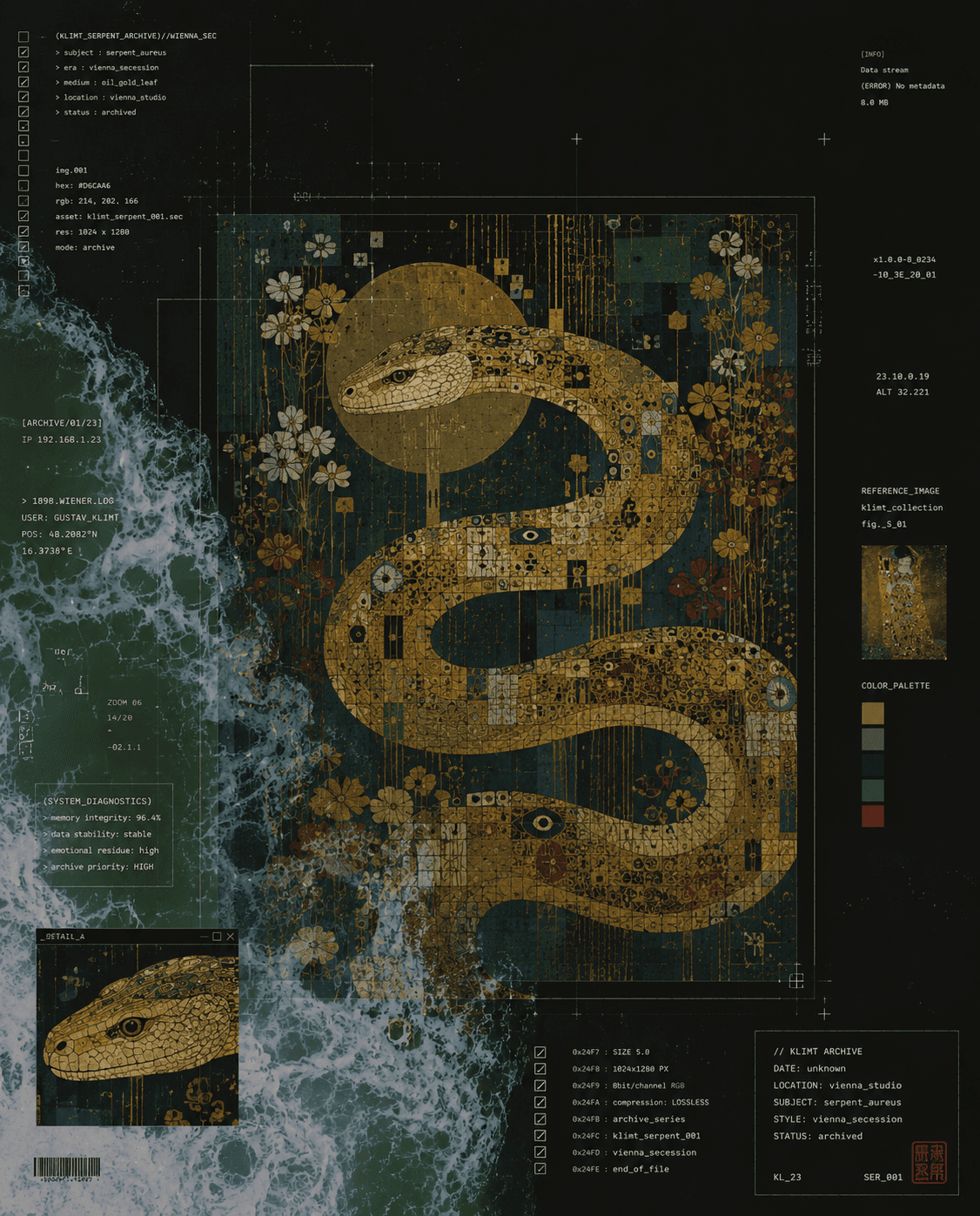
I first noticed the serpent not in a myth but on silk. It was a Gucci scarf in a boutique window: a red-and-black snake stretched across pale fabric, its body looping with both menace and elegance. I stood there longer than I expected, caught between attraction and unease. The snake shimmered like a warning disguised as ornament. Since then, I have seen it again and again, on Bulgari’s coiled bracelets, on embroidered jackets from Kenzo, on high-fashion prints that promise both danger and desire. Fashion keeps returning to this creature. And I keep asking: why?
In the West, the serpent is temptation, the fall of Eve, the whisper of sin. But in the East, the serpent is never only evil. It is older, heavier, hungrier. It curls through the rice fields, rises with the flood, slides into the mountain shrine. It is not the devil, it is the earth itself, wet and alive, dangerous and divine.
In Japan’s oldest clay figurines, snakes wrapped around hips and wombs to guard fertility. In the fields, they became gods of harvest, glistening in summer rain, swallowing rats to protect the grain. Later, they were driven into the mountains, punished into myth, recast as the eight-headed monster Orochi or as jealous demons seducing humans. Revered, feared, worshiped, slain, the serpent shifted, but it never disappeared.
This is why Bulgari’s Serpenti collection feels so uncanny. Those gleaming coils of gold and diamonds are not merely luxury, they are the latest version of an ancient gesture, a reminder that to wear a serpent is to wear survival, transformation, and risk. When I see a model draped in a serpent necklace, I don’t see Satan; I see a myth reborn, a creature carrying the paradox of fear and fascination.
The West teaches the serpent as betrayal. The East teaches the serpent as endurance. A body that sheds its skin, a body that drowns villages, a body that gives birth to gods. To wear a serpent is to wear contradiction, to embrace the cycles of death and rebirth, of terror and beauty. Gucci’s embroidered snakes, Kenzo’s prints, Bulgari’s coils, they are not decorations but echoes of shrines and rituals.
When I was young, I was told to fear snakes: they bite, they lurk, they wait. And yet I could not stop looking at them. Their scales glistened like wet silk; their movement was soundless but certain. That fascination returned when I saw them on fabric, on jewelry, on the skin of fashion itself. The lesson of the serpent is that the line between horror and beauty is thin, and the distance between danger and ornament shorter than we admit.
I have not only looked at serpents in fashion, I have worn them. A silver ring shaped like a coiled viper, a scarf patterned with intertwined scales, a necklace that curves against my collarbone like a living creature. Each piece felt less like ornament and more like dialogue: a conversation with myth, with danger, with resilience. When I wrap a serpent scarf around my neck, I feel its coils as both protection and provocation, as if I am borrowing its vigilance. When I clasp a bracelet that spirals like a snake, I sense history circling my wrist, a reminder of both fragility and endurance.
As a fashion illustrator, especially in silk scarf design, I return to the serpent again and again. Its body is line, curve, ornament, and frame all at once. It can weave through blossoms, border patterns, enclose negative space. On silk, it becomes rhythm, an endless cycle of movement, as if the fabric itself were alive. When I sketch serpents, I imagine how they would drape with the folds of cloth, how their forms might shift as the wearer moves, how scales might catch light like jewelry. For me, to draw a serpent is not only to design, it is to negotiate myth. Should the snake be jeweled and metallic, echoing Bulgari, or fluid and protective, like an Eastern Naga? Often, I merge the two: scales like armor, bodies like rivers. In my illustrations, the serpent is never decoration alone; it is argument, inheritance, survival.
Research also deepened my fascination with the serpent. In my study of Japanese culture, I found that snake imagery shifted over time: from a symbol of fertility in the Jōmon period, to a deity of rice fields and harvest in the Yayoi era, and later to a mountain god associated with floods and earthquakes. The serpent could bless or punish, embodying both protection and destruction. These transformations reveal how human communities project their changing fears and hopes onto the snake. For me as a designer, this history suggests that to draw a serpent is to draw not one meaning but many, layered through centuries of belief and survival.
Psychologists might say this attraction is not accidental. Evolution trains us to notice danger, but fashion transforms that vigilance into allure. The serpent is sleek, predatory, unpredictable, qualities that trigger both fear and fascination. To wear it is to rehearse control over danger, to claim intimacy with what could wound. In psychoanalytic terms, the serpent embodies aggression and sexuality; in consumer psychology, it satisfies the craving for power and distinctiveness. Fashion thrives on this paradox: the closer we stand to threat, the more alive we feel. A snake on silk is a safe form of risk, a way to turn fear into ornament and survival into style.
Fashion knows this. A serpent resting on silk or skin carries not only allure but memory: of floods survived, of rice harvested, of gods born from mountains. Bulgari coils history around the wrist, Gucci spreads myth across fabric, Asian designers weave snake motifs into prints that speak of endurance rather than sin. To wear the serpent is to enter a story older than scripture, where the snake is not a curse but a companion.
And so I do not wear the serpent as guilt. I wear it as history. I wear it as reminder that survival is not pure, that beauty is not innocent, that what we fear can also be what saves us. I wear it knowing that in every culture, the serpent asks the same question: will you look away, or will you dare to touch?
I first noticed the serpent not in a myth but on silk. It was a Gucci scarf in a boutique window: a red-and-black snake stretched across pale fabric, its body looping with both menace and elegance. I stood there longer than I expected, caught between attraction and unease. The snake shimmered like a warning disguised as ornament. Since then, I have seen it again and again, on Bulgari’s coiled bracelets, on embroidered jackets from Kenzo, on high-fashion prints that promise both danger and desire. Fashion keeps returning to this creature. And I keep asking: why?
In the West, the serpent is temptation, the fall of Eve, the whisper of sin. But in the East, the serpent is never only evil. It is older, heavier, hungrier. It curls through the rice fields, rises with the flood, slides into the mountain shrine. It is not the devil, it is the earth itself, wet and alive, dangerous and divine.
In Japan’s oldest clay figurines, snakes wrapped around hips and wombs to guard fertility. In the fields, they became gods of harvest, glistening in summer rain, swallowing rats to protect the grain. Later, they were driven into the mountains, punished into myth, recast as the eight-headed monster Orochi or as jealous demons seducing humans. Revered, feared, worshiped, slain, the serpent shifted, but it never disappeared.
This is why Bulgari’s Serpenti collection feels so uncanny. Those gleaming coils of gold and diamonds are not merely luxury, they are the latest version of an ancient gesture, a reminder that to wear a serpent is to wear survival, transformation, and risk. When I see a model draped in a serpent necklace, I don’t see Satan; I see a myth reborn, a creature carrying the paradox of fear and fascination.
The West teaches the serpent as betrayal. The East teaches the serpent as endurance. A body that sheds its skin, a body that drowns villages, a body that gives birth to gods. To wear a serpent is to wear contradiction, to embrace the cycles of death and rebirth, of terror and beauty. Gucci’s embroidered snakes, Kenzo’s prints, Bulgari’s coils, they are not decorations but echoes of shrines and rituals.
When I was young, I was told to fear snakes: they bite, they lurk, they wait. And yet I could not stop looking at them. Their scales glistened like wet silk; their movement was soundless but certain. That fascination returned when I saw them on fabric, on jewelry, on the skin of fashion itself. The lesson of the serpent is that the line between horror and beauty is thin, and the distance between danger and ornament shorter than we admit.
I have not only looked at serpents in fashion, I have worn them. A silver ring shaped like a coiled viper, a scarf patterned with intertwined scales, a necklace that curves against my collarbone like a living creature. Each piece felt less like ornament and more like dialogue: a conversation with myth, with danger, with resilience. When I wrap a serpent scarf around my neck, I feel its coils as both protection and provocation, as if I am borrowing its vigilance. When I clasp a bracelet that spirals like a snake, I sense history circling my wrist, a reminder of both fragility and endurance.
As a fashion illustrator, especially in silk scarf design, I return to the serpent again and again. Its body is line, curve, ornament, and frame all at once. It can weave through blossoms, border patterns, enclose negative space. On silk, it becomes rhythm, an endless cycle of movement, as if the fabric itself were alive. When I sketch serpents, I imagine how they would drape with the folds of cloth, how their forms might shift as the wearer moves, how scales might catch light like jewelry. For me, to draw a serpent is not only to design, it is to negotiate myth. Should the snake be jeweled and metallic, echoing Bulgari, or fluid and protective, like an Eastern Naga? Often, I merge the two: scales like armor, bodies like rivers. In my illustrations, the serpent is never decoration alone; it is argument, inheritance, survival.
Research also deepened my fascination with the serpent. In my study of Japanese culture, I found that snake imagery shifted over time: from a symbol of fertility in the Jōmon period, to a deity of rice fields and harvest in the Yayoi era, and later to a mountain god associated with floods and earthquakes. The serpent could bless or punish, embodying both protection and destruction. These transformations reveal how human communities project their changing fears and hopes onto the snake. For me as a designer, this history suggests that to draw a serpent is to draw not one meaning but many, layered through centuries of belief and survival.
Psychologists might say this attraction is not accidental. Evolution trains us to notice danger, but fashion transforms that vigilance into allure. The serpent is sleek, predatory, unpredictable, qualities that trigger both fear and fascination. To wear it is to rehearse control over danger, to claim intimacy with what could wound. In psychoanalytic terms, the serpent embodies aggression and sexuality; in consumer psychology, it satisfies the craving for power and distinctiveness. Fashion thrives on this paradox: the closer we stand to threat, the more alive we feel. A snake on silk is a safe form of risk, a way to turn fear into ornament and survival into style.
Fashion knows this. A serpent resting on silk or skin carries not only allure but memory: of floods survived, of rice harvested, of gods born from mountains. Bulgari coils history around the wrist, Gucci spreads myth across fabric, Asian designers weave snake motifs into prints that speak of endurance rather than sin. To wear the serpent is to enter a story older than scripture, where the snake is not a curse but a companion.
And so I do not wear the serpent as guilt. I wear it as history. I wear it as reminder that survival is not pure, that beauty is not innocent, that what we fear can also be what saves us. I wear it knowing that in every culture, the serpent asks the same question: will you look away, or will you dare to touch?